Sipping Coffee in a Thousand-Year-Old Temple: The New “Zen Practice” of China’s Youth
At ten o’clock on a Saturday morning, two kinds of scent drift through the air at Yongfu Temple in Hangzhou.
Incense wafts from the Main Hall — deep, solemn, carrying the gravity you’d expect from a sixteen-hundred-year-old temple. The other scent is fresher: the roasted aroma of coffee beans, spilling out from a small courtyard to the right of the temple gate. The two currents of air meet beneath a ginkgo tree. Neither seems to mind the other.
A young man in a gray hoodie takes his paper cup. Printed on its side are two characters: “Dí Fán” — Wash Away the Troubles.
An Americano.
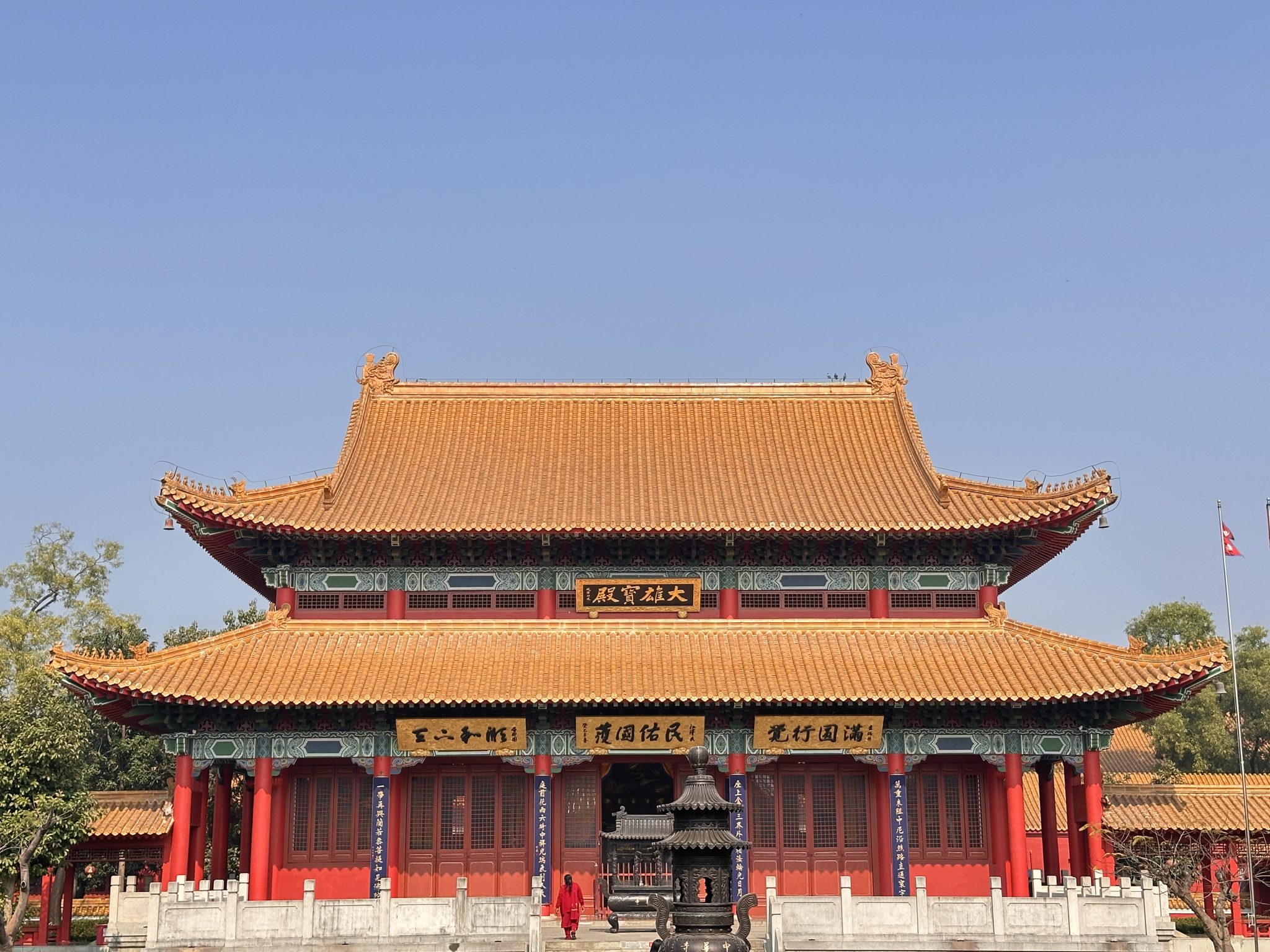
He finds a stone stool and sits down. Above him, the upturned eaves date back to the Southern Song dynasty. In his hand, a twenty-eight-yuan iced Americano. From here, he can see the crowds of pilgrims jostling at Lingyin Temple next door — but none of that concerns him right now. Neither do his KPIs. Neither does the project proposal due next week.
He takes a sip. Hmm. Tastes like a regular Americano. But whether it’s psychological or not, his heart rate has definitely slowed by half a beat.
Three Hundred and Ten Percent, and the Appetite of an Era
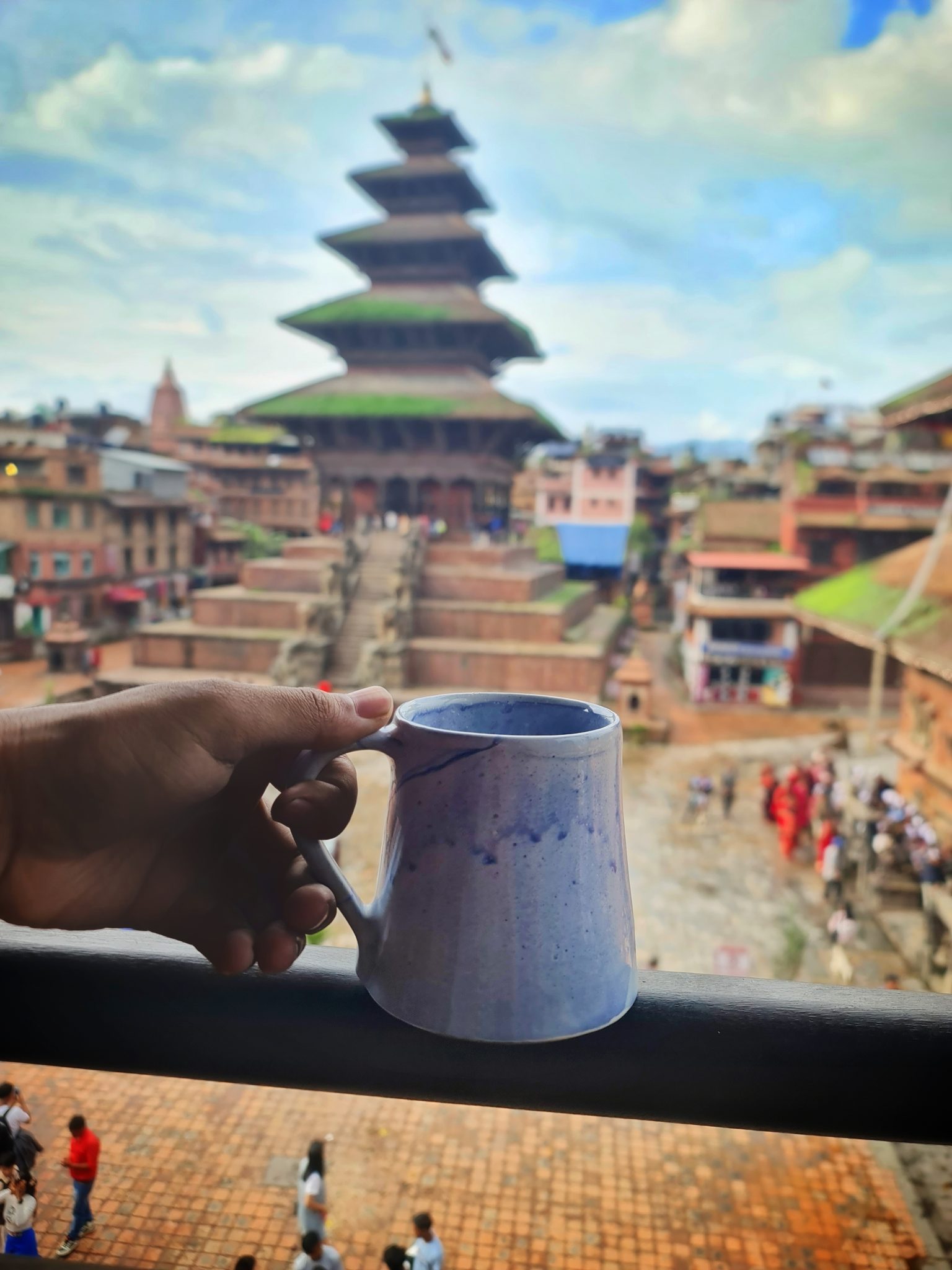
If you’ve visited any temple of note recently, you probably don’t need statistics to feel it: young people are “occupying” temples.
Ctrip’s numbers confirm the intuition — in 2025, ticket orders for temple-related scenic spots surged 310% year-on-year. Among all visitors carrying backpacks into temples, those born in the 1990s and 2000s account for nearly half. On Xiaohongshu, the hashtag #TempleTravel has surpassed 240 million views. On Douyin, searches for “temple” have jumped forty percent in a single year.
This isn’t scattered influencer check-ins. This is a quiet demographic migration.
And the destinations extend far beyond burning incense and bowing to Buddha. The ritual object shop at Yonghe Temple always has a line, young people clutching newly consecrated eighteen-bead bracelets. The noodle canteen at Lingyin Temple has become a regular on Dianping’s must-eat lists. At Yongfu Temple’s Cibei Coffee, the wait on a weekend afternoon stretches past an hour.
The temple economy — a phrase that sounds almost surreal — is approaching a hundred-billion-yuan scale. But the numbers are only the surface. The real question is: why temples?
A volunteer at Lingyin Temple put it bluntly: “So many more people come now. But if you ask them whether they believe in Buddhism, a lot of them shake their heads. They just come to stay for a while.”
“Stay for a while.” Three words, tossed off so casually. Yet within them lies a particular weariness unique to this era.
A Coffee Called “Wash Away the Troubles”
Cibei Coffee at Yongfu Temple has taken the art of naming to an entirely new level.
The menu is handwritten, hanging from a bamboo blind. The Americano is not called an Americano — it’s called “Dí Fán”, Wash Away the Troubles. The name traces back to a Tang dynasty poem by Shi Jianwu: “Tea is the washer of troubles; wine is the lord of forgetting cares.” Borrowing a tea allusion for coffee is slightly askew, yet somehow fitting — both are, after all, things that wake you up.
The latte is called “Tíng Xuě” — Resting Snow. Perhaps for the moment milk meets espresso, like snowflakes settling on the cup’s surface.
The mocha is “Huān Xǐ” — Joy. The matcha latte is “Tīng Shān Yǔ” — Listening to the Mountain’s Voice. The caramel macchiato is “Mò Bái” — Ink White. The fresh coconut latte is “Chán Chū” — Zen’s Beginning.
And the most popular item on the menu, written in four characters: “Suí Yuán Kā Fēi” — Serendipity Coffee.
“Suí yuán” means to follow fate, to let things be. In practice, it’s a blind box. You pay twenty-eight yuan and drink whatever you draw. Americano, latte, mocha — all up to chance. If you get what you wanted, no need for joy; if you don’t, no need for regret. After all, as the Buddha would say, everything is suí yuán.
The genius of this pricing strategy is that it transforms the act of consumption itself into a miniature Zen session. No need to sit cross-legged in meditation. No need to chant sutras. You just hold a cup containing something you can’t identify, sit in the courtyard for a while, and somehow you’ve completed a form of “practice.”
A young woman from Shanghai wrote on social media: “I don’t actually believe in Buddhism, but that afternoon sitting in Yongfu Temple’s courtyard drinking coffee was the most peaceful three hours I’ve had in half a year. Nobody rushing me, nobody asking about my KPIs, the cell signal was even bad — it was perfect.”
What is low-barrier Zen? This is it.
You don’t have to burn incense, but you’re willing to pay for a courtyard of wintersweet blossoms and dappled light. You don’t have to read Buddhist scriptures, but “Wash Away the Troubles” somehow sounds better than “Americano.” What twenty-eight yuan buys isn’t the origin of the coffee beans or the roasting curve — it’s, how to put it — a breath of air, free from judgment.
“Sober Superstition”
Some might sneer: a crowd of young people flocking to temples to drink coffee, buy bracelets, queue up to burn the first incense of the year — isn’t this just superstition in disguise?
But that’s precisely what makes this worth talking about: they are more clear-eyed than anyone.
Survey data from iiMedia Research offers a telling profile: among the young people pouring into temples, 80% have a college degree or higher, and 65% earn above the societal average. It’s hard to call this a credulous crowd.
They’re not only not credulous — they openly admit on social media that their “superstition” is make-believe. A highly upvoted Weibo post, from a young woman who has clocked three consecutive weeks of visits to Yonghe Temple, read:
“I know burning incense won’t give me a raise. But I just want to come. The scent of sandalwood slows my heart rate, and the quiet of the temple makes the world feel less noisy. To be honest, spending ten yuan on a ticket to sit here for two hours is cheaper than spending three hundred on therapy.”
The post received tens of thousands of likes. Not because it was particularly profound, but because it was devastatingly honest.
Psychology has a concept called “ritualized coping” — when people face highly uncertain environments, they seek a sense of certainty through fixed, repetitive ritual behaviors. Turning vague anxiety into concrete actions — even if those actions don’t solve the problem — can quiet the mind, at least for a while.
Seeking academic success? Head to Manjushri Hall. Looking for a job? Visit the Reclining Buddha Temple. Searching for love? Lingyin Temple awaits. Call it label-driven superstition if you want — or call it a low-cost psychological self-rescue plan invented by young people navigating a high-pressure society.
Nothing captures the anxiety density of this era quite like the confession: “I know it doesn’t work, but I still want to go.”
And the beauty of temples? They never preach.
No one follows you around asking, “Do you believe?” “Have you taken refuge?” “Would you like to sign up for a membership?” The Buddha is simply there. You can make a wish to him, or ignore him entirely. You can kneel and kowtow three times, or just stand quietly in a corner for a moment.
This gentleness that demands no commitment — this is exactly what young people need most.
Peace of mind, sometimes, isn’t about finding the answer. It’s about finding a corner where you don’t have to answer any questions.
The Delicate Boundary Between the Sacred and the Commercial
As temple coffee took off, so did the controversy.
The most direct objection: isn’t putting a coffee shop inside a temple an encroachment on sacred space? Outside Yongfu Temple’s gate, a long queue snakes toward Cibei Coffee. Inside its walls, the thousand-year rhythm of morning bells and evening drums continues undisturbed. Can these two atmospheres really coexist?
At the end of 2025, Lingyin Temple offered its own answer.
That December, the three Lingyin temples — Lingyin, Yongfu, and Taoguang — simultaneously eliminated all admission fees. The original 45-yuan Feilai Peak ticket plus the 30-yuan incense coupon: gone, all of it. At the same time, Lingyin Temple shut down every commercial operation within its walls. But Cibei Coffee at Yongfu Temple — classified as a “cultural creative accessory” — was kept.
It was a subtle gesture.
Closing the commerce inside the temple declared: faith is not for sale. Keeping the coffee outside the temple acknowledged: young people need a reason to sit down.
This symbiosis of “returning to the essence” and “engaging with the world” may well be the survival strategy Chinese temples have found for this era. In the past, temples sustained themselves on donations of incense oil and guided sentient beings through dharma assemblies. Today, a twenty-eight-yuan cup of “Dí Fán” performs a different kind of guidance — helping a young person crushed by work remember, within the walls of a thousand-year-old temple, how to take a deep breath.
A cultural commentator in Shanghai summed it up: “Temple coffee doesn’t feel out of place because what it offers isn’t a religious experience — it’s a spatial experience. The simplest appeal of young people coming to temples is this: I want to sit, for a while, somewhere quiet, beautiful, and saturated with history.”
Hardly a profound insight. But it names an overlooked truth: in this city, free, quiet public spaces where you can sit and daydream without spending money have become vanishingly rare.
Temples have inadvertently filled this gap. And the coffee? It just gives the act of filling it a respectable name.
Stealing Half a Day’s Leisure from a Fleeting Life
The young man in the gray hoodie has finished the last sip of his “Dí Fán.”
He tosses the paper cup into the bin and looks up at the ginkgo tree. The tree is from the Southern Song. The Buddha is a thousand years old. He is just an ordinary passerby at ten-thirty on a Saturday morning. Two hours ago, he was anxiously scrolling through his phone. Two hours from now, he’ll return to that anxious world.
But those two hours in between — those were his.
He stands up from the stone stool, brushes the dust off his pants. The temple bell sounds, right on cue — not ringing for him, but he takes it as a good sign anyway.
The Tang dynasty poet Li She once wrote: “Passing through a bamboo courtyard, I chanced upon a monk in conversation — and stole half a day’s leisure from this fleeting life.”
Stolen leisure doesn’t need to be profound. It can be nothing more than a twenty-eight-yuan iced Americano, and an afternoon where no one is rushing you to leave.
In an era where everything is accelerating, young people have pressed pause with a cup of temple coffee. The Buddha here isn’t responsible for getting you a promotion or a raise. But his presence itself is a reminder —
Days don’t have to be lived in such a hurry.
And that, perhaps, is the plainest wisdom life has to offer.
Related Content
The Little Brass Scale That Never Lies: Fifty Years Behind a Chinese Herbal Counter
An Eight-Yuan Lunch: Midday at the Community Canteen Old Neighbors Call Their Living Room