Chaozhou: The Underrated Food Capital That Brews Its Days in Gongfu Tea
At Six in the Evening, the Bridge Comes Apart
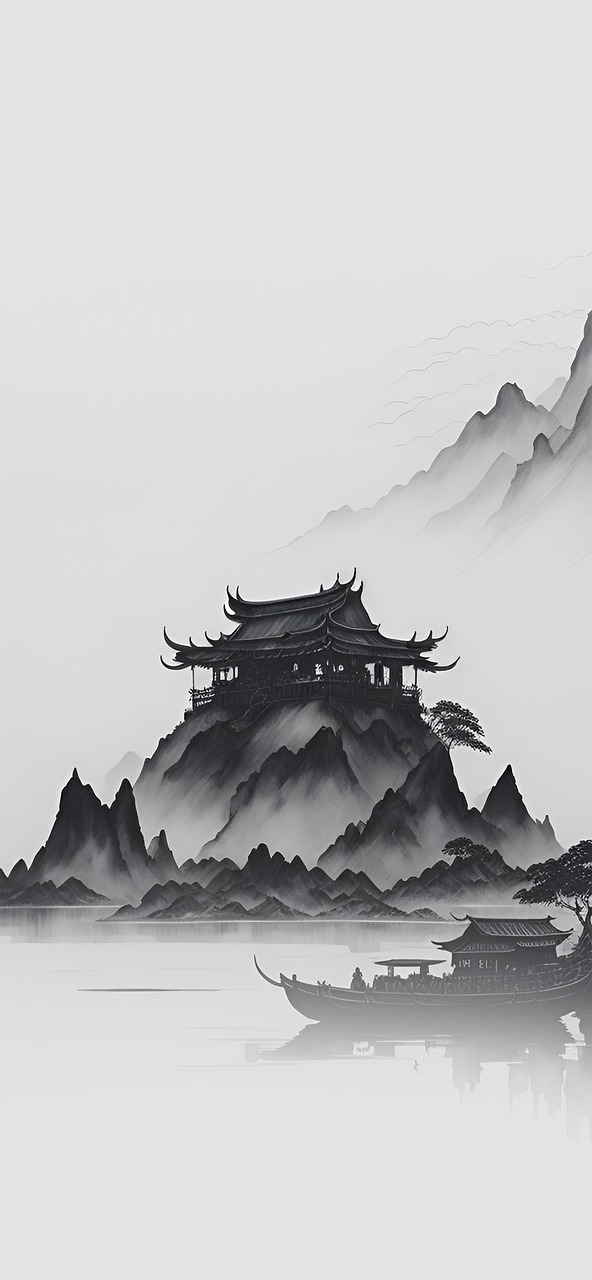
At six in the evening, the Guangji Bridge on the Han River “disassembles” on schedule. The eighteen flat-bottomed boats are hauled away from the piers one by one, the floating span opens in the middle, leaving a passage about a hundred meters wide. A cargo boat loaded with sand sounds its horn and slips through the bridge opening, carving a white wake across the water. Nobody on shore pays much attention. The tea drinkers keep drinking. The woman selling candied fruit doesn’t even look up from skewering a pickled starfruit.
This bridge has been assembled and disassembled since the seventh year of the Qiandao era of the Southern Song (1171) — over 850 years without a break. Twenty-four pavilions stand on the stone piers, and eighteen boats form the middle span: joined by day as a floating walkway for pedestrians, separated at dusk to let ships pass. Locals call it “crossing the river and demolishing the bridge,” with no hint of mockery — more like they’re describing a family craft passed down the generations.
As the sun sank into the Han River, the lights of Paifang Street came on one by one. The smell of braised goose drifted out of the alleyways, mixed with the pine-wood scent of charcoal stoves heating water. An old man crouched at his own doorstep — a small red-clay pot, three white porcelain cups, water freshly boiled, tea not yet poured.
At that moment I thought: this, roughly, is Chaozhou — a city whose bridge rests twice a day.
Why Chaozhou
Chaozhou is underrated. Xi’an, Dali, Dunhuang — travelers can recite those names in their sleep. Chaozhou stays quiet. It has no “must-see before you die” marketing slogan, no luxury hotel cluster by the airport. What it has is an old city whose bones were fixed in the Song dynasty, and a philosophy of life that treats eating and drinking tea as serious business. A hundred-plus kilometers behind it, the neon of the Pearl River Delta blazes; Chaozhou keeps to its own rhythm on the Han River.
Cantonese cuisine splits into three schools — Guangzhou, Chaozhou, and Hakka — and food critics often call Chaozhou food one of the most refined regional cuisines in China. It isn’t about spice or heavy flavor; it’s about the taste of the ingredient itself. A fish can be steamed, or made into “fish rice.” A goose gets braised for hours so the aromatics seep into the meat inch by inch. Even Chua Lam, a food critic notoriously hard to please, has praised Chaozhou cooking again and again.
Gongfu tea is the city’s other calling card. A Chaozhou person drinks tea at least three times a day: when guests arrive, when doing business, and after a fight. The tea set is reduced to the bare minimum: one clay pot, three small cups. Three — not one per person. In Chaozhou, whoever shows up drinks from the same three cups, refilled as you go. Outsiders usually blink the first time they meet this “three cups no matter how many guests” rule.
From Guangzhou, the high-speed train takes just over three hours to Chaoshan Station, then a forty-minute taxi ride into the old city. The old town is small enough to walk, two days unhurried, three days unspoiled.
Guangji Bridge, Stone Arches, and a River Named Han
The things worth seeing in Chaozhou boil down to a handful. Don’t rush.
Guangji Bridge comes first — go in the afternoon, walk the floating span, then wait by the river for it to come apart. Each of the bridge’s twenty-four pavilions has its own name and story; the middle boat section has wooden railings underfoot and sways slightly, like walking on the water itself. It is counted with the Zhaozhou Bridge, the Luoyang Bridge, and the Lugou Bridge as one of China’s four great ancient bridges — yet only Chaozhou uses its ancient bridge as everyday transport. Bridge joined: walk across. Bridge open: take the ferry. Every day, for 850 years. An old saying goes, “a li of long bridge, a li of market” — this bridge was never just a bridge. Stalls filled its pavilions, selling fish, cloth, and medicine; crossing it was like walking a whole street. After restoration, a few stalls have returned — Chaozhou’s three treasures, gongfu tea sets — so the old “market on the bridge” lives on, at least in miniature.
Paifang Street is Taiping Road: twenty-two restored stone archways in a single line, from “Number One Scholar Arch” to “Arch of Neo-Confucian Learning,” as if the entire imperial-examination history of Chaozhou had been erected along one avenue. The main street is busy with tourists by day, vendors’ cries rising and falling; the real flavor lies in the lanes on either side. In Jia Di Lane hides a row of Ming-Qing officials’ residences, their gate towers carved with woodwork as intricate as embroidery — step inside and you realize these houses outdid the arches in grandeur.
Kaiyuan Temple stands east of Paifang Street, founded in the 26th year of the Tang Kaiyuan era (738), and remains the most-visited temple in Chaozhou. Look closely at the gable roofs: chipped porcelain inlay (qianci) builds dragons, phoenixes, and flowers that shine in the sun as if freshly glazed. This craft of decorating architecture with broken porcelain pieces is unique to Chaozhou; you won’t see it anywhere else.
The river is called the Han, the mountain the Han, the road Changli — all surnamed “Han.” In 819, Han Yu was exiled to serve as prefect of Chaozhou for admonishing the emperor against receiving a Buddha relic. He stayed only eight months. In that time he wrote his famous “Crocodile Edict” to drive the crocodiles from the river, founded schools, and brought the culture of the Central Plains to this remote town. The people of Chaozhou have remembered him for twelve hundred years: the river changed its surname, the mountain changed its surname, even the oak trees are called “Han trees.” The Han Yu Memorial Temple stands on the east bank of the Han River, built into the hillside — climb it and the whole old city spreads below. Inside hangs a couplet: “The river and mountains changed their names; the grass and trees became famous.” Those eight characters are the highest honor Chaozhou ever granted a banished official.
The Locals’ Chaozhou
A tourist’s Chaozhou begins at Paifang Street; a local’s begins at the morning market.
At 6:30 a.m., the Xima Road market is already loud with voices. Steam rises from the rice-noodle-roll stalls — Chaozhou’s version is nothing like the Cantonese one. Rice batter steams into a thin sheet, wrapped around beef or egg, doused with a house-made sauce and fried preserved radish: salty, fragrant, scalding. Next door, the kway teow soup uses a pork-bone broth, freshly cut flat noodles, a few slices of lean meat and meatballs — one bowl and you’re warm to the bones. Deep in the market sits a stall selling salty water rice cakes: batter steamed in tiny porcelain cups, the dimple in each filled with wok-fried preserved radish. Pop them one at a time; they’re so cheap it feels rude to haggle.
When the day is done, head to the riverbank. The reassembling of the floating bridge is a daily spectacle: the boats are towed back into position one by one, the wooden railings reconnected, pedestrians streaming across again. The east bank has the best view — claim a spot half an hour early. Locals are already there, sitting on the steps in twos and threes. Some brought thermoses; others set up charcoal stoves right on the shore to brew gongfu tea. The stove is small; the tea fragrance is not.
After dark, Guangji Bridge puts on two light shows, each about ten minutes, free of charge; the pavilions are outlined in colored light, their reflections shattering into gold on the river. Don’t go straight back to the hotel afterward. Duck into the lanes behind Paifang Street, where the late-night raw-marinade stalls are just opening: blood clams, marinated crabs, marinated shrimp, cured in garlic, chili, and soy sauce, sweet with freshness. Chaoshan people call raw marinade “poison” — eat it once, get addicted, never quit.
If you have an extra half day, drive thirty-plus kilometers south to Longhu Ancient Village. Founded in the Song dynasty, the village preserves over a hundred Ming-Qing houses. No ticket, no tour groups — just elderly men playing cards in the ancestral halls. The stone lanes are polished bright by centuries of feet; some houses have collapsed, exposing Ming-dynasty wall foundations. Lovers of the raw and original will adore it; the fastidious may frown. It is exactly that: a village nobody has polished.
One Hotpot of Beef, and You Understand Chaozhou
The most condensed form of Chaozhou cuisine is a beef hotpot.
Chaoshan people take beef-eating to a level of exactitude that borders on fussy. The cow is slaughtered the same day, never frozen, sliced and served straight from the board. The neck cut — the “snowflake” marbled section — is a rare part: a few jin per animal, and it’s gone if you arrive late. Cooking is timed by the second: eight seconds, one more and it’s tough. The dip is satay sauce, sweet-salty, pushing the beef’s umami up front. Hand-pounded beef balls are the other marvel: leg meat beaten with iron rods a thousand times into a paste, then squeezed into balls. A famed Chinese food documentary says Chaoshan beef balls “bounce like ping-pong balls” — locals don’t take that as a metaphor. People have genuinely tried it. Drop one on the table and it bounces.
Braised goose is the feast dish. Chaoshan cooks use lion-head geese, a breed of enormous size — an old gander can weigh twenty jin. Each household guards its own brine recipe: cassia bark, star anise, lemongrass, galangal; a pot of aged brine used for over a decade, growing richer with every goose. Heads, livers, feet, and wings are sold separately; the head and the liver go fastest. Connoisseurs order both.
Try “fish rice,” too. The name says rice, but it isn’t: whole sea fish — unscaled, unbutchered — boiled in heavy brine, served cold with a dish of Puning bean paste. Fishermen once carried it to sea as their meal; that’s where the name comes from. The “back to basics” that Chaozhou cuisine is praised for — this dish is the purest expression of it.
Street snacks shouldn’t be missed either. Oyster omelet: fresh oysters wrapped in sweet-potato starch, fried into a golden cake, crisp outside, custardy within, eaten with fish sauce. Duck-mother dumplings: duck-egg-shaped sweet dumplings in sesame or mung-bean-paste filling, served in sweet soup with citron. Candied fruit: starfruit, wax apple, and guava cut into pieces, tossed with licorice plum syrup — sour-sweet and appetite-opening, the perfect walking snack.
For lodging, many old houses in the old city have become guesthouses. Chaoshan residences follow the “four golden rooms” or “descending tiger” layouts — four main rooms around a courtyard, osmanthus planted in the middle. Pick a quiet courtyard; at night, lie in the courtyard chaise and listen to the wavering notes of Chaozhou opera mixed with insects — that’s how you live in Chaozhou. If you want silence, stay on the east bank of the Han: across the bridge, still the old city, far quieter.
The Philosophy of Three Small Cups
Gongfu tea is the key to understanding Chaozhou, and it’s worth learning properly.
The tea set has exactly three pieces: a red-clay hand-thrown pot, a sharing pitcher, and three small white porcelain cups. The tea is Fenghuang dancong, an oolong from Phoenix Mountain north of Chaozhou, with an aggressive fragrance — its most famous cultivar is called “duck shit aroma,” an ugly name for a pricey tea. Brewing is a craft: boiling water heats the pot and warms the cups; leaves fill the pot seventy or eighty percent; the first infusion is the “washing tea,” poured away; only the second is drunk. Pour quickly and from height into a low vessel; the finale has a name of its own — the first round is “Guan Gong patrols the city,” tea poured in an even rotation into the three cups; the final drop is “Han Xin counts the soldiers,” just enough and nothing more. The three cups go around in turn; no one keeps one to himself.
When you visit a Chaozhou home, your host keeps refilling your cup. No need to rise and thank them — tap the table twice with your index and middle fingers. That’s the “finger-knock salute” of the Chaozhou tea table. Legend says an emperor, traveling incognito, couldn’t kneel in thanks at a tea table, so he tapped his fingers instead of kowtowing. True or not, the courtesy has passed down the generations. In 2022, “traditional Chinese tea processing techniques and associated customs” were inscribed on UNESCO’s list of intangible cultural heritage, and Chaozhou gongfu tea ceremony is part of it. A place whose way of drinking tea makes it into a world heritage list — you don’t see that every day, anywhere on earth.
Chaozhou has two other crafts it can boast of. One is gold-lacquered wood carving; the signature piece is the “lobster and crab basket” — a whole block of camphor wood carved into a basket, crabs, shrimp, and waterweed, layer upon layer, fine enough that the joints of a crab’s legs actually move. The other is Chaozhou opera, sung in the Chaozhou dialect, over five hundred years old; old stages in the old city still host performances at festivals — the wavering notes you hear at night from a courtyard guesthouse are exactly that.
Then there’s the Chaozhou dialect, a world of its own. It preserves a large share of ancient Chinese pronunciation and vocabulary, which is why scholars call it a “living fossil of classical Chinese.” At the market, elderly stallholders speak Chaozhou; you speak Mandarin. They understand you; you may not fully understand them — smile and gesture, it works better than a translation app. A Chaozhou friend told me that the first time he heard the Book of Songs read aloud in Chaozhou dialect, the two-thousand-year-old lines suddenly sounded right: those rhymes were written for exactly this kind of pronunciation.
Practical Tips
Now for the practical part.
Getting there: fly to Jieyang Chaoshan Airport, or take the high-speed rail to Chaoshan Station, then a ride-share about forty minutes into the old city. Inside the old city you walk everywhere — comfortable shoes matter more than anything.
Season: spring and autumn are the best, mild with little rain. Summer is hot and muggy in a way that presses on your chest; winter is damp and cold, with no indoor heating — pack warm clothes if you feel the chill. Golden Week and Spring Festival are wall-to-wall people and locals flee the city; don’t join the crowd. Check the day’s schedule for the bridge’s opening and closing and the light shows before you set out — times do shift.
Three things to avoid: the souvenir shops on Paifang Street’s main drag run about thirty percent above alley prices — don’t buy tea or wood carvings there. Ignore the “one-day tour” touts and any “local restaurant” recommended by taxi drivers. For beef hotpot, pick the place where locals queue; the long line never lies.
One rule of tea-table etiquette is enough: your host pours, you tap your fingers in thanks, and the three small cups go around. Don’t complain about the cup size — a Chaozhou person drinks more tea in a day than an outsider drinks coffee in a month.
On your way out, go to the riverbank and look at Guangji Bridge once more. It’s still there — taking itself apart and putting itself back together every day for 850 years, like the breathing of this city. Chaozhou never teaches you to slow down. It simply lives slowly, day after day.