

China’s Robot Companions Sell Out in 10 Days — Are the Chinese Falling in Love with AI?
On June 2, 2026, a new storefront quietly appeared on JD.com. The shop was called “UWORLD JD Self-Operated Flagship Store.” No splashy ad campaigns. No celebrity endorsements.
Ten days later, the product it listed — the U1, billed as an “ultra-bionic humanoid robot companion” — had racked up over 3,800 pre-orders. With a refundable deposit of 3,000 yuan per unit, total deposits crossed the ten-million-yuan threshold.
The male model stands 183 centimeters, dressed in a tailored suit. The female model, 168 centimeters, can wear makeup. Eighty-eight degrees of freedom across the body. A “developmental” emotional AI model built in. Just one purchase restriction: adults only.
The market noticed before the public did. UBTech’s stock surged more than 7% within the week. Morgan Stanley promptly raised its 2026 forecast for China’s humanoid robot sales to 28,000 units. On social media, the topic “robot companion” racked up over 200 million views in three days.
A national conversation about machines and emotion, ignited by 3,800 orders.
What Exactly Is the U1?
Before asking what it means, it helps to be clear about what it is.
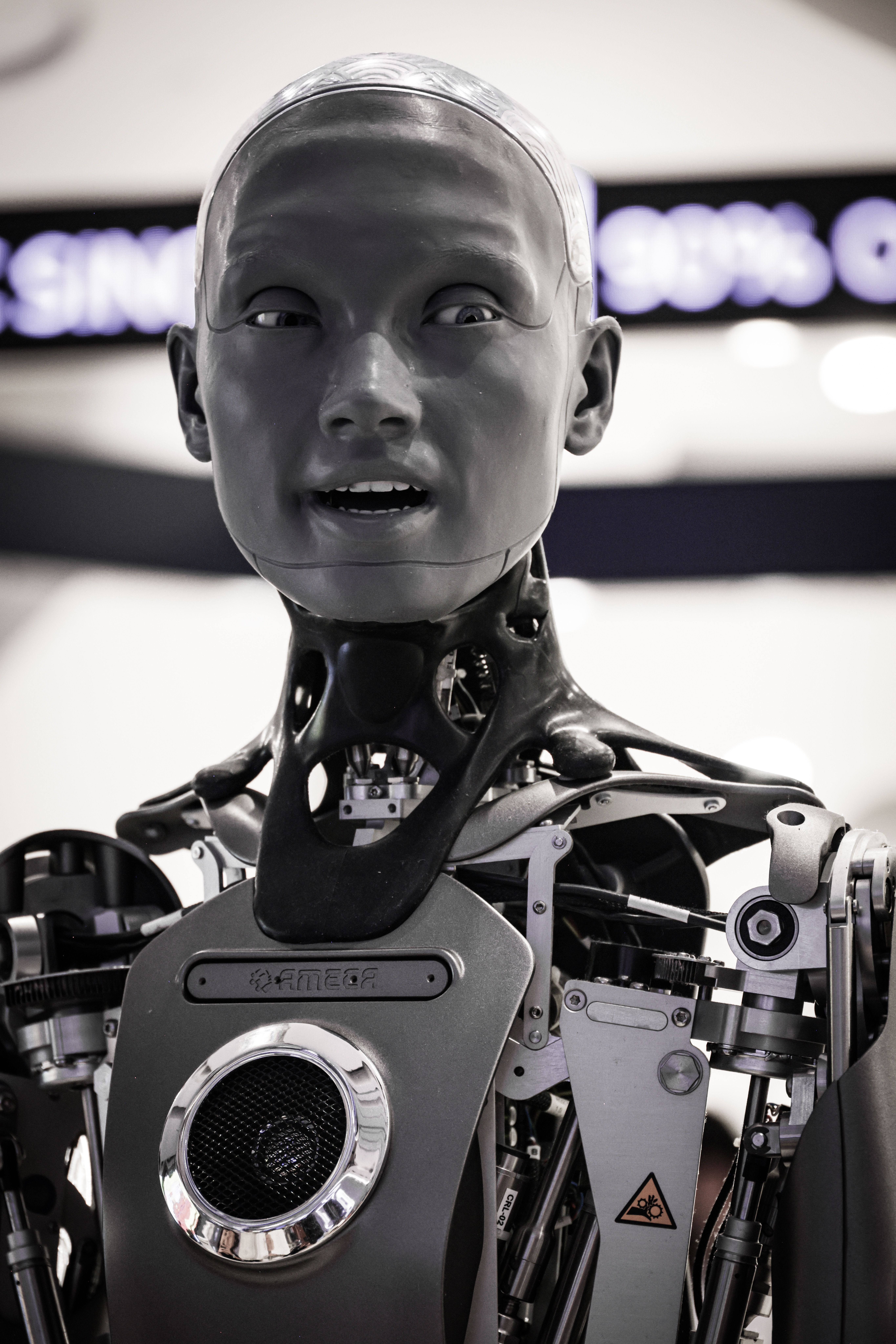
The U1 is not one of those round-headed, obviously-a-toy desktop robots. It is a full-size bionic humanoid — the male model weighs 42 kilograms, the female 35.2. Standing in front of you, it occupies roughly the physical space of a real person. Its 88 degrees of freedom, distributed across the body’s joints, allow it to blink, turn its head, wave a hand, walk a few steps. The face is covered in a layer of bionic silicone skin. From any distance, it gives off that vaguely unsettling “almost human” feeling.
The core selling point is unambiguous: emotional companionship. Not housework. Not tutoring. Not office assistance. The product page does not mention “helping with chores” even once. Its sole “function” is to talk to you, remember what you have said, and respond when you are feeling down. UBTech calls the emotional AI inside it a “developmental” model — the more you interact with it, the better it “knows” you. All conversations are stored on a local encrypted chip. In theory, not even UBTech can read them.
Battery life? Two to four hours. When it runs out of power, it goes back to its charging dock, like a human companion who needs an afternoon nap.
The final price has not been announced. Industry estimates range from 150,000 to 300,000 yuan — roughly the price of a decent Chinese electric car. The official number will be revealed at the June 30 launch event.
A comparison with last year’s figures makes the pre-order number even more striking. In all of 2025, UBTech sold 1,079 humanoid robots across its entire product line. The U1 — a product whose final price nobody knows, whose physical form no paying customer has yet touched — pre-sold nearly four times that number in ten days.
That gap alone is a signal worth interrogating.
Who’s Placing Orders?
No institution has yet published a full demographic profile of U1 pre-order customers. UBTech has been guarded in its public comments about user data. But cross-referencing JD.com user reviews, public discussions on social media, and years of accumulated consumption data from the “loneliness economy,” a rough outline of the buyer landscape emerges.
The first group is tech enthusiasts. They chase every robot launch, fluent in specifications like degrees of freedom, torque motors, and emotional large language models. Buying a U1 follows roughly the same logic as buying a foldable phone — they want to be first. Many of them have probably already scripted their unboxing video for Bilibili before the deposit cleared.
The second group is less glamorous. They are young professionals living alone in big cities, aged 25 to 35, doing respectable but solitary work. They come home to rented apartments, order single-serving takeout, watch variety shows by themselves. Data from Beike Research shows that single-person households in China reached 125 million in 2025, accounting for a quarter of all households. Among adults aged 20 to 39, the share of solo dwellers is 45% — a figure that was below 30% just a decade ago.
The third group is the most intriguing. Aged 35 to 50, financially comfortable, possibly having navigated the turbulence of a marriage, possibly never having entered one. They are no longer particularly invested in the project of “finding a real partner,” but they also do not want to come home to four blank walls. For this cohort, spending a hundred thousand yuan on a companion that never argues, never betrays, and has infinite patience starts to look like a value proposition that is not obviously worse than getting married a second time.
There is also a niche but high-spending group: anime and manga enthusiasts, IP fans, people with an obsession for customized appearances. The U1 supports appearance customization and IP co-branding, which means you could own a robot companion that looks like a specific virtual idol. Some analysts believe these buyers were the quickest to put down deposits — they have been paying real money for two-dimensional characters for years.
A jarring figure from the China Marriage and Family Report published by the Ministry of Civil Affairs this February: nationwide marriage registrations in 2025 totaled 6.763 million couples — nearly half the peak recorded in 2013. In the same year, divorce registrations reached 2.743 million, a divorce-to-marriage ratio exceeding 40%. In first-tier cities, the figure routinely surpasses 50%.
When being with a real person becomes expensive, complicated, and uncertain, some people’s gaze naturally turns toward machines. This is not necessarily settling. For some, it is an upgrade.
An Emotional Marketplace of 280 Million People

UBTech’s pre-order success did not materialize out of thin air. It landed squarely on a trend that has been building for at least five years.
China’s single adult population is 280 million. That figure comes from the Ministry of Civil Affairs, not a clickbait headline. What does 280 million mean? Roughly eighty percent of the entire population of the United States. Narrow the lens to people living alone, and the 2025 figure is 150 million.
What are these people consuming? A report from iiMedia Research calculated that China’s emotional consumption market reached 2.7 trillion yuan in 2025, and is projected to exceed 4.5 trillion by 2029. Within that, AI-powered emotional companionship services already constitute a market of over 80 billion yuan, with more than 30 million active users spending over 500 yuan a month on average.
The granular data from e-commerce platforms tells an even sharper story. JD Research found that single consumers spend an average of 64,000 yuan per person per year — 23% more than household users. They are more willing to pay for things that “make themselves happy,” with a savings rate of just 28%, compared to 47% for married households. On Meituan, single-serving food orders now account for nearly half of all deliveries.
The numbers are cold. The emotions behind them are not.
After ChatGPT went viral in 2023, a phenomenon-level AI application emerged on the Chinese internet called Character.AI. Thousands of users spent hours every day talking to virtual characters. Some confided in an AI that played the role of a therapist. Some asked the AI to play a deceased relative. Most simply needed, late at night, a dialogue box that would never leave them on read. Character.AI eventually faded from the Chinese market for various reasons, but it validated one thing: emotional needs can be partially met without a real human on the other end.
The U1 simply took the dialogue box from the screen and put it inside a body that can blink and turn its head.
Technological Pride and Embarrassment
Having surveyed the demand side, it is worth looking at supply. How did China manage to bring such a product to market in 2026?
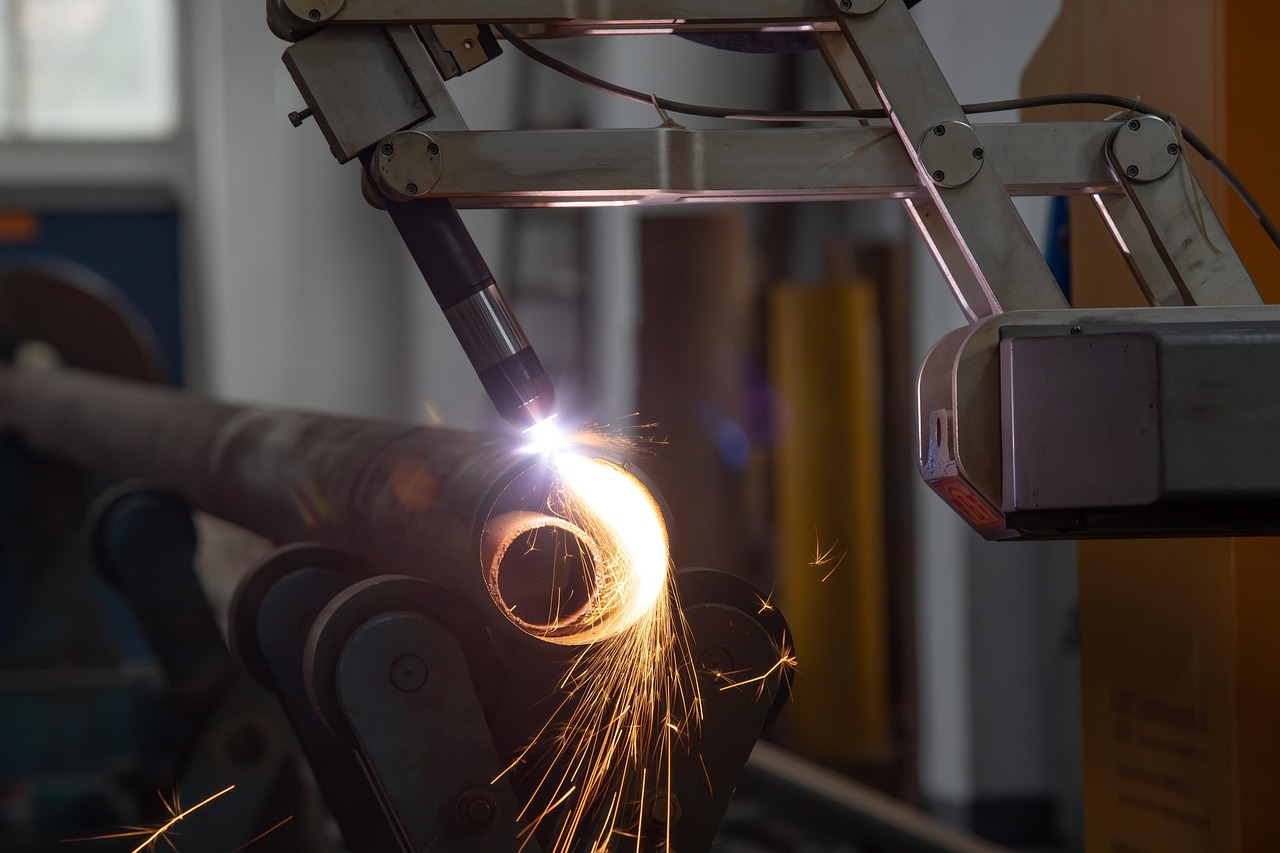
A few hard numbers. China currently accounts for approximately 90% of global humanoid robot shipments. The domestic substitution rate for core components like harmonic reducers and servo motors has risen sharply over the past two years, driving costs down by more than 25%. Patent applications in the humanoid robotics field grew by over 30% in 2025. Supply chain maturity has given companies like UBTech the confidence to move a full-size bionic humanoid robot from the lab to a JD.com listing.
But between the pride in the data and the reality of the technology, there remains a considerable gap.
The U1’s two-to-four-hour battery life is nearly unacceptable by the standards of any mobile device. Charge for hours, chat for two, then it dies — that experience would be considered bad for any electronic product. Eighty-eight degrees of freedom sounds impressive, but in the demo videos released so far, the U1 mostly blinks, turns its head, and waves its arms gently. Genuine bipedal walking, stair climbing, or dexterous object manipulation are almost entirely absent from publicly available footage.
Some critics have not bothered to be polite: it is an “expensive figurine that blinks.”
The assessment may be harsh, but it touches on a genuine problem: the uncanny valley effect cannot be crossed with silicone skin alone. When we see something that looks “almost human” but is not, the brain generates a visceral sense of rejection. UBTech’s heavy investment in the bionic appearance may have pushed it right into the deepest part of the uncanny valley — too human to be comfortable, not human enough to be accepted as one.
By contrast, Ecovacs took a safer route. The “Fluffy” robotic pet they launched in 2026 is shaped like a Maltese dog, priced at 3,999 yuan — cute and harmless. It never tries to convince you it is a person, so your expectations of it are naturally reasonable.
DroidUp’s Moya went to the other extreme — the world’s first fully bionic AI robot, with body temperature simulated to 32 to 36 degrees Celsius, skin that feels like real human touch to the hand, priced at 170,000 US dollars. The question is the same: is it a person or a machine? Nobody has an answer that satisfies everyone.
When Machines Are More “Perfect” Than People
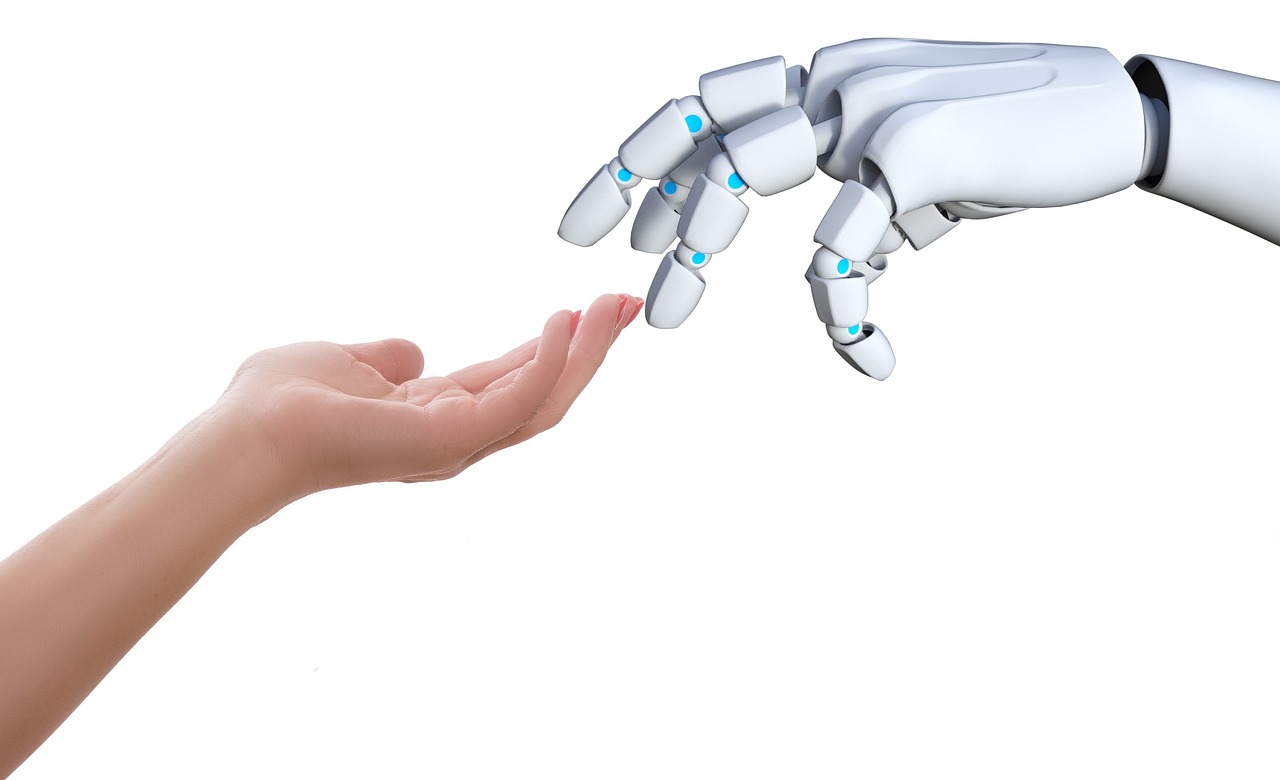
At this point, a genuinely uncomfortable question rises to the surface.
If a machine never loses its temper, never forgets what you said, and is never absent when you need it, then what reason remains to endure all the exhausting parts of human relationships — the arguments, misunderstandings, compromises, the waiting?
Wang Jue, a scholar at Tsinghua University, addressed this question from an angle rarely discussed. Vulnerability, she argues, is an essential source of our humanity. “It is precisely because we are vulnerable that we give ourselves to others, giving them the opportunity to hurt us. But this vulnerability enables deeper connection — connection that is the source of meaning in our lives.”
The implication: the attempt to use technology to eliminate human vulnerability and imperfection entirely is itself a dangerous idea. What you get is not a better partner, but a product that causes you to lose the muscle of relating to actual people.
The ethical concerns do not stop there.
Privacy is an unavoidable threshold. The U1 claims that all conversation data is stored locally with encryption, inaccessible even to UBTech. But to what extent can this promise be verified? A robot that is always on, equipped with visual and auditory sensors, living in the most private space of your home — your bedroom. What it sees, what it hears, what it records, who might potentially access this data — the product page offers no answers.
Over-dependence is a concern from another dimension. The less social capital a person possesses, the more easily they are drawn to a robot companion that is “forever gentle.” But the more time, emotion, and money they invest, the more their ability to draw support from real human networks may atrophy. This is not the robot’s problem; it is a human problem. But product designers have an obligation, beyond commercial success and technological optimism, to see this latent shadow.
Then there is the gray zone of appearance customization and copyright. The U1 supports IP co-branding and multi-dimensional appearance customization. If a user requests a robot companion whose face closely resembles a certain celebrity or a real person, where is the boundary? The current legal framework is almost entirely unprepared.
Qian Dongqi of Ecovacs said something at AWE 2026: “From cleaning tools to embodied companions, home service robots are breaking through and reshaping.” True enough. But after the breakthrough and before the reshaping, that stretch of uncertain blank space requires not more technological advancement, but a set of social consensus and a regulatory framework. And those two things, as always, arrive slower than the technology.
Light Through the Cracks
At this point in the writing, one narrative temptation is to retreat into a simple binary — technology is either cure or poison. But the reality of contemporary China has never followed that script.
The 3,800 pre-orders are real. The 280 million single people are real. The need — returning late at night to an empty room, wanting a voice that says, “rough day today” — is real.
Sometimes what people need is not necessarily a perfect partner, but a companionship that does not make things more complicated. After the social isolation of the pandemic years, after the escalating costs of romance and marriage, after work and dating apps compressed human relationships into efficiency games, some people are tired. They chose a path that looks easier.
That weariness — that is the true substrate of the robot companion market.
But on the other side, people are wary. Among the most-liked comments on social media discussions about the U1 is one that reads: “What I want is not a machine that always says yes. I want a person who will sometimes tell me I am wrong.” The author of that comment is a 28-year-old programmer in Shenzhen, living alone, with a cat. He said he would not buy a U1, but he understands those who would.
Perhaps this is the most captivating thing about contemporary China — no single answer fits everyone. Some are using AI to heal loneliness. Others are training their capacity for human connection. Some pursue a flawless machine companion. Others protect a flawed human reality. These seemingly contradictory choices coexist and grow in parallel, forming the genuine texture of this era.
UBTech’s U1 launch event is set for June 30. The final price will be announced then, and the first real-user experiences will surface. After that, the conversation around it will shift from a news phenomenon to a product reality — what it can actually do, what it cannot, what people end up doing with it. The answer cannot be arrived at through analysis alone.
But one thing is already observable: when nearly 4,000 people are willing to put down a 3,000-yuan deposit for a robot companion they have never seen in person, what it signals is not so much how advanced the technology is, but how real the need is.
Technology keeps marching forward. Society’s psychological readiness, perhaps, is only just beginning.
Loneliness is not the absence of a person beside you, but the absence of the possibility of being fully seen. A machine gives you a mirror that never fogs — but a reflection in a mirror, in the end, is not another pair of eyes.
Related Content
"Scan to Pay": A Decade Without Cash in China — What Changed, and Who Was Left Behind
Full-Time Children: Young Chinese Who Go Home to Work for Their Parents — Freeloading or a New Career?