The Sound of Silence: Why “Liubai” (Negative Space) in Chinese Painting is More Sophisticated Than Filling the Canvas
A painting, almost entirely empty.
In Ma Yuan’s “Fishing Alone on the Cold River” from the Southern Song dynasty, a lone boat drifts on the river with an old fisherman bending over to fish. Beyond this, almost everything else is blank. Vast areas of negative space occupy seven or eight-tenths of the canvas—it’s almost like an unfinished work.
But this is precisely the subtlety of Chinese painting.
Western artists often marvel at this painting: How dare they leave so much blank space? Yet in the eyes of Chinese painters, this is merely basic technique not worth mentioning. Liubai (留白), or negative space, is the core technique of Chinese painting and the soul of Eastern aesthetics.
What magic does liubai possess that has captivated Chinese painters throughout the ages?
From Unconscious to Conscious: A History of Negative Space Awareness
Liubai was not always a deliberate artistic choice.
In the figure paintings of Eastern Jin painter Gu Kaizhi, the backgrounds were often blank. At that time, liubai was more a result of necessity—figure paintings, after all, only needed to portray the figures well; why bother painting backgrounds? This “unintentional” blankness, however, made the subject more prominent.
By the Tang dynasty, painters began to realize that blank space wasn’t just “unpainted”—it could also “sell mood”—no, it could sell atmosphere. Painters began deliberately crafting blank space to make it part of the composition.
The Song dynasty marked the golden age of Chinese landscape painting and the period when liubai truly matured.
Northern Song landscape paintings still employed “panoramic composition”—mountains needed to be majestic and grand, the canvas filled to capacity. But Southern Song painters began to be “clever”—they favored “corner composition”: depicting only a corner or half of the landscape, filling the rest with clouds, mist, and water-sky. This elevated liubai from supporting player to lead.
Yuan dynasty painter Huang Gongwang’s “Dwelling in the Fuchun Mountains” pushed liubai to its extreme. As the long scroll unfolds, vast expanses of blankness transform into the misty, rolling waters where sky and water merge, creating boundless atmosphere. The negative space in this painting is no longer “nothing”—it becomes “everything”—water, sky, mist, or any image the viewer can imagine.
Where there is no painting, there arises wondrous realm.
This line from Qing dynasty painter Da Chongguang’s “Painting Quota” reveals the ultimate secret of liubai: blankness is not nothing—blankness is infinite.
Technique Decoded: The Many Possibilities of Liubai
Liubai is simple in concept but infinitely variable in practice. Chinese painters developed numerous liubai techniques, each with its own nuances.
Mountain-Rock Liubai: Mist is Also Landscape
Mountain-rock liubai involves leaving blank spaces around mountains and rocks to represent clouds, mist, or light. This is the wisdom of “shaping reality through emptiness.”
Ma Yuan’s “Treading and Singing” is a classic case. The foreground figures and trees are rendered clearly, while the mid-level mountain slopes and distant peaks are surrounded and obscured by vast clouds—essentially negative space. This blankness not only makes the main peak appear more towering but also dissolves the heaviness of the solid mountain rocks. The painting becomes breathable.
Water-Sky Liubai: A Vast Expanse Tells You What the World Is About
Water-sky liubai uses large blank areas to represent rivers, lakes, and seas.
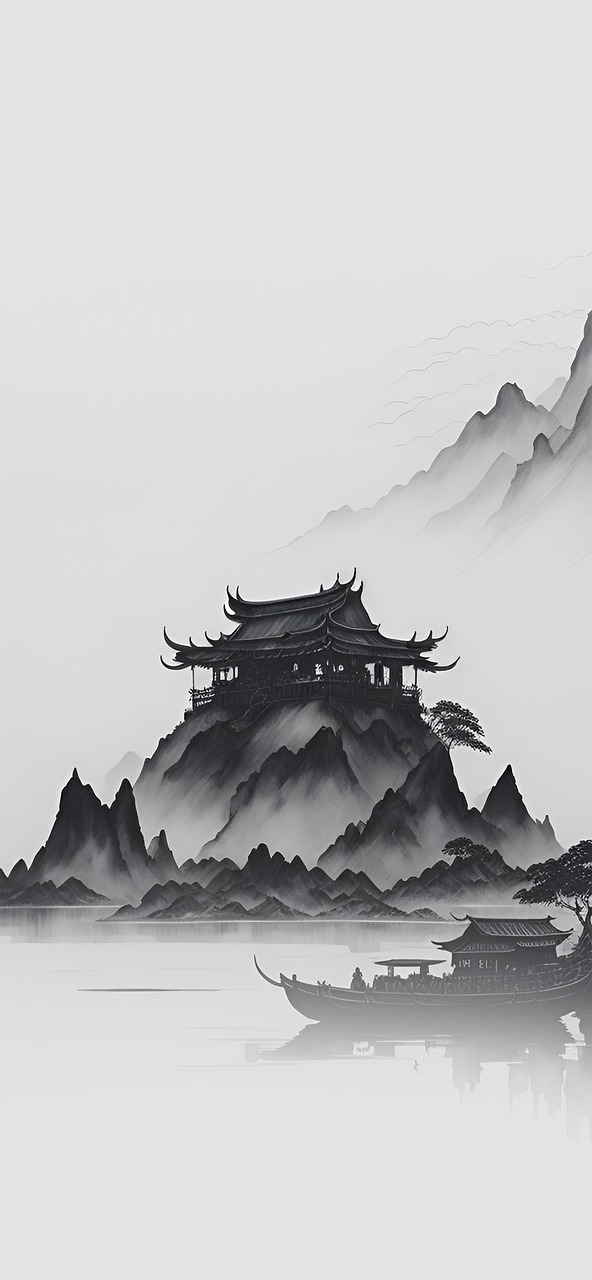
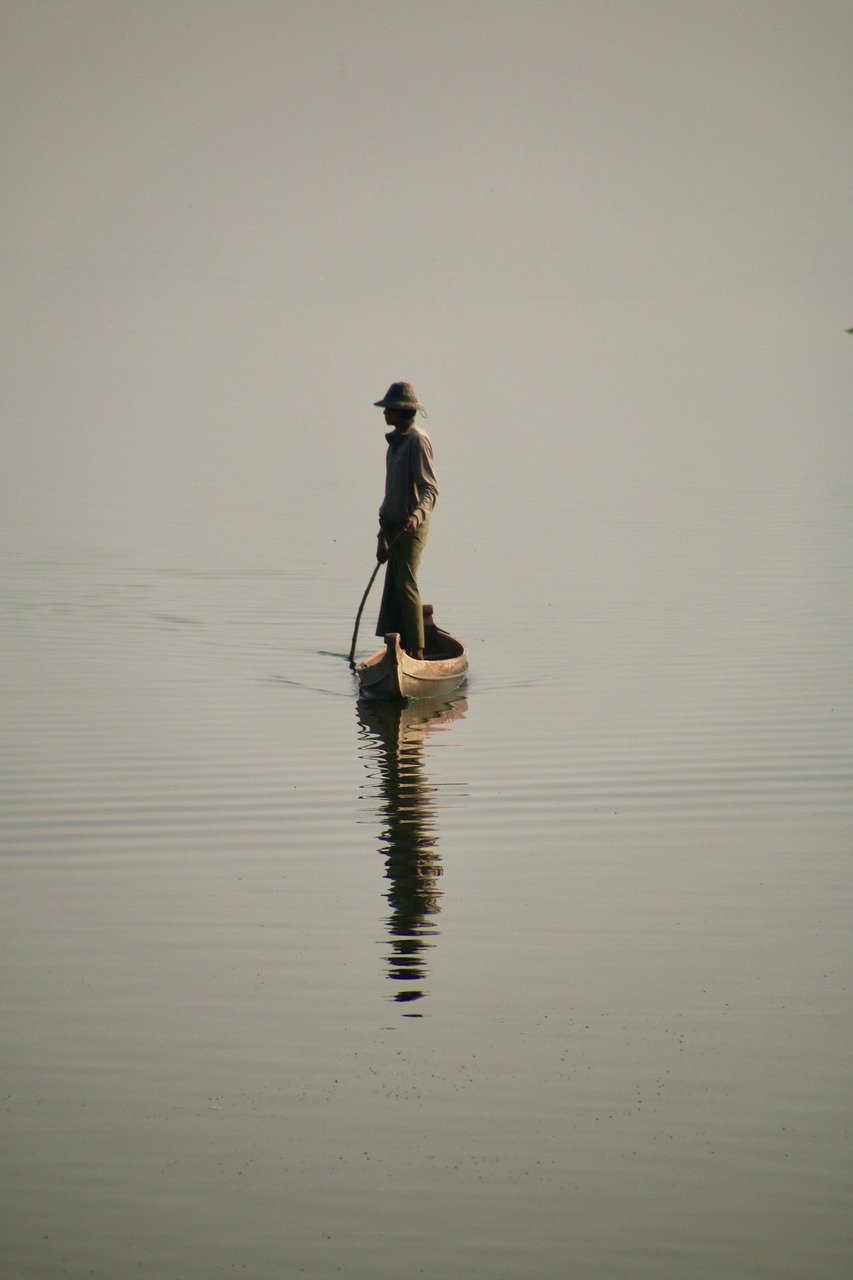
“Fishing Alone on the Cold River” is the textbook example. A solitary boat, one fisherman, the endless river and sky as one. The negative space is both the cold river and the mist, blurring the boundary between heaven and water. Standing before this painting, one feels the vastness of the river, imagines those deep, cold waters.
Qing dynasty monk painter Shitao wrote: “The mountain peak rises high, piercing the clouds; the water’s surface is vast, meeting the sky.” This atmosphere is entirely supported by liubai.
Sparing Ink Like Gold: The Extreme of Less is More
“Sparing ink like gold” is an important concept in Chinese painting theory—using the least ink to express the most content.
Southern Song painter Liang Kai was the representative of this approach, famously called “Liang the Madman.” In his “Li Bai Walking and Reciting Poetry,” the poet-immortal’s robe is sketched with just a few strokes, while the vast majority of the canvas remains blank. This negative space highlights Li Bai’s transcendent spirit and creates the atmosphere of “walking and reciting, floating and unrestrained.”
This “reduced brushwork” style completely hands over interpretation to the viewer. Whatever you think the blankness represents—it becomes that.
Atmospheric Liubai: Hearing the Sounds Within the Painting
The highest realm of liubai is creating “images beyond the painting.”
Modern painter Qi Baishi’s “Frogs Ten Miles from the Spring” is a superb example. There are no frogs in the painting at all—just a few tadpoles swimming in the mountain spring. Most of the canvas is negative space, representing vast waters and distant mountain streams.
But as you gaze at the painting, you think: Tadpoles’ mother is a frog—and thus you seem to hear the croaking of frogs from ten miles away.
This is what is meant by “poetry within painting, painting within poetry.” Liubai not only brings visual impact but also stimulates your imagination, ultimately satisfying you auditorily.
The highest realm of Chinese painting is enabling viewers to “hear” the sounds within the painting.
Interdependence of Emptiness and Substance: The Eastern Wisdom Hidden in Liubai
Liubai is not merely a technique—it is also a visual presentation of Chinese philosophical thought.
Laozi’s “Interdependence of Being and Non-Being”
The famous passage from the Daodejing—“Thirty spokes share one hub; where there is nothing, there is the function of the wheel”—explains this principle. The hollow center of the wheel (nothingness) is precisely what allows the wheel to turn (somethingness).
Liubai is the painting version of this principle. The “substance” in a painting (what the brush depicts) is the scene, but the “emptiness” (the blank space) is also scene—and it’s the scene that makes “substance” more prominent. Without “emptiness,” “substance” stands alone, nowhere to be placed.
Zhuangzi’s “Empty Room Generates Light”
Zhuangzi said: “An empty room generates brightness; auspiciousness dwells in stillness.”
Chinese painters deeply understood this. If a painting is too full, the viewer’s eyes have no place to rest and feel suffocated instead. Liubai provides breathing room in the composition, allowing viewers to catch their breath and wander into the painting spiritually.
Zen’s “Form is Emptiness”
Zen thought had a particularly profound influence on liubai.
“Form” refers to all tangible material phenomena, while “emptiness” refers to their non-eternal, self-less nature. In painting, “form” is where the brush has been; “空” (emptiness) is liubai—both are interdependent.
Through liubai, painters pursue a transcendent, spiritual, quiet beauty that embodies Zen’s spirit of “not establishing words, teaching outside tradition”—without writing a single character, achieving complete elegance.
Confucian “Middle Way”
Liubai also aligns with Confucian “neutral” aesthetics.
Compositions that are either too full or too empty are considered extremes. Liubai precisely adjusts the balance between substance and emptiness, density and lightness, allowing the painting to achieve equilibrium and harmony. This aligns with the gentle, subtle beauty Confucianism pursues.
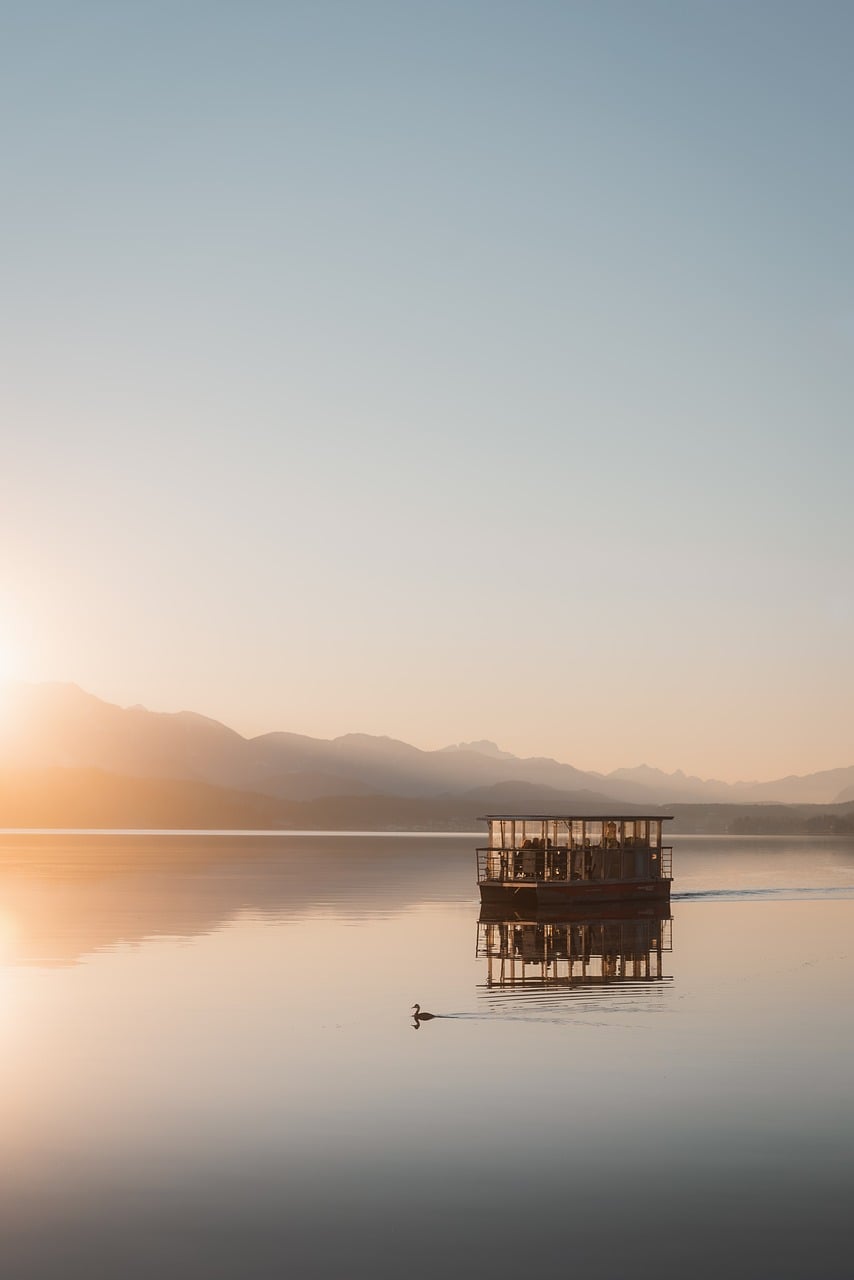
The history of Chinese painting is virtually the history of liubai’s evolution—from unconscious to conscious liubai, then to infusing philosophical thought—liubai rose from technical to artistic, ultimately becoming the iconic symbol of Eastern aesthetics.
Beyond Art: The Contemporary Resonance of Liubai
Liubai’s influence has long exceeded the boundaries of Chinese painting.
Japan’s “Yohaku” Aesthetics
In Japanese art, “yohaku” (余白) became a core aesthetic concept.
Hasegawa Tohaku’s “Pine Forest Screen” from Japan’s Azuchi-Momoyama period transforms liubai into swirling mist, making the pine forest seem to emerge and vanish between reality and dreams. The blank space in this painting is not “nothing”—it is the medium connecting the real and the sacred.
Interestingly, the word “yohaku” as a distinct aesthetic term has a relatively short history. It was “rediscovered” by the Japanese art world after encountering Western oil painting during the Meiji era and was given a position symbolizing Eastern beauty.
Negative Space in Modern Design
Graphic designers have long embraced the wisdom of liubai.
Apple’s product design—abundant white, abundant blank space—inherits the liubai philosophy of Chinese painting. MUJI’s design philosophy of “less is more” also traces directly to the spirit of liubai.
In web design, book typography, and logo design, “negative space” design has become an established discipline. A good designer understands: sometimes not doing something is more important than doing something.
The Life Philosophy of Liubai
What liubai teaches us extends beyond art.
Modern people live too full—schedules full, social connections full, information full. Anxiety, exhaustion, and burnout have become the ailments of the age.
Perhaps we can borrow some wisdom from Chinese painting. Filling isn’t the only way to feel充实 (full); appropriate blankness can give us room to breathe. Leaving liubai in life isn’t waste—it’s another form of enrichment.
Life needs liubai. Only by understanding liubai can we go further.
How to Appreciate Liubai: A Beginner’s Guide to Viewing Paintings
Standing before a Chinese painting with extensive liubai, you might feel bewildered: so much blankness, where is the beauty?
Let me teach you three questions to ask—
First: Where is the liubai?
First find the blank areas in the composition. Note that liubai isn’t always a large white area—sometimes it’s lightly rendered “clouds,” sometimes it’s deliberately left as breathing room.
Second: Why here?
Think about it: if this were fully painted, what would happen? Doesn’t liubai make the subject more prominent? Doesn’t it give the painting more breath?
Third: What does the liubai represent?
This is the most interesting step. Try to assign meaning to the liubai—is it water? Sky? Mist? Or nothing at all? Different people may see different things—this is precisely the charm of liubai.
Start from everyday life: next time you take a photo with your phone, try to capture only half the scene, letting the other half become “liubai.” You’ll discover that photography also practices “treating white as black.”
Art and life follow the same principles.
A painting filled to the brim seems overwrought and loses its charm instead. Appropriately applied liubai gives viewers space for imagination and gives the painting breath and life.
The same applies to life.
Not every second needs to be seized, not every task needs to be perfect. Learning liubai is what Chinese people have taught us through millennia of artistic wisdom.
The greatest sound is silence; the greatest form is formless. The highest beauty is often hidden in those “things that are not.”
Related Content
Kunqu: One Word, Half a Minute, and Six Centuries of Grinding

The Guqin: Why Have the Chinese Spent Three Thousand Years Speaking to Heaven and Earth with Just Seven Strings?